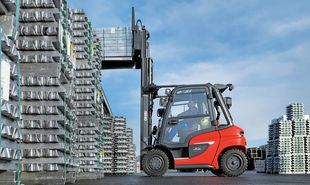
 Photo: Linde MH
Hydrogenated vegetable oil (HVO) can reduce the CO2footprintof industrial trucks by up to 90%. According to Linde MH, the biofuel even provides higher engine performance, requires no separate refueling infrastructure, and can be mixed with regular diesel. This is something they intend to utilize more widely.
HVO diesel, known for some time but perhaps less familiar to some due to the hype surrounding high-tech fuels, is produced through hydrogen treatment of various vegetable oils, animal fats, and waste and residual materials such as used cooking oils and fats from restaurants and the food industry. Its chemical structure is almost identical to that of conventional diesel and can therefore completely replace it. "By approving this fuel for the engines of our diesel forklifts, we are giving our customers the opportunity to significantly reduce the CO2footprintof their diesel forklifts without having to invest a single cent in additional infrastructure," says Frank Bergmann, Senior Product Manager for Linde counterbalance forklifts. The expert continues, explaining that while the cost per liter of HVO diesel is somewhat higher than standard diesel, this is offset by its improved sustainability.
In addition to reducing CO₂emissionsby up to 90 percent compared to conventional diesel, local emissions such as particulate matter, nitrogen oxides (NOₓ), hydrocarbons (HC), and carbon monoxide (CO) are also reduced,positively impacting the working environment for employees. Furthermore, HVO diesel has a higher cetane number (ignition quality), resulting in efficient and clean combustion and reduced soot formation in engines and exhaust systems. Its high performance, even at low temperatures down to -22° Celsius, opens up a wide range of applications. Last but not least, a compelling argument is the flexibility of HVO blending: the fuel can be used in its pure form or in any mixture with fossil diesel and requires no hardware modifications to the forklift.
Linde MH has approved the biofuel for both current and most previous model series in the lifting capacity range of 1.4 to 18 t. "All customers who are unable to switch to electric forklifts in the short term can improve their CO2 balance with HVO," says Bergmann.