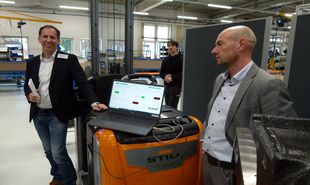
 Blood glucose experts at Still
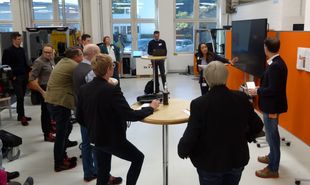
The Still show at the press presentation in Hamburg not only featured the usual high decibel level, but also a service concept extended to other brands, a hydrogen strategy, and an automation strategy. In the midst of the biggest wave of transformation, everything is in flux.
Perhaps the most important finding of all is the admission that forward-looking concepts and innovative strategies are not yet all rigidly fixed, but are explicitly geared towards flexibility. Thus, in addition to the division into the future two product lines "Xcellence" and "Classic Line," a whole range of other strategic directions are intended to set the course in the coming years.
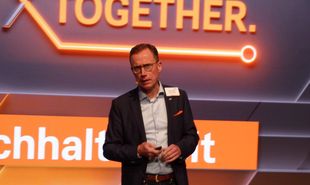 Brand strategist F. Müller
In terms of energy efficiency, the new RXE 10-16C is leading the way. It's possible to drive the new RXE 10-16C in the DIN EN 16796 cycle with energy consumption up to 17% lower than its predecessor, the RX 50 – despite its higher vehicle weight. This aligns with the trend set by brand manager Frank Müller, who also admits: "Not everything is finalized yet"Simply responding to new requirements with "greenwashing" isn't enough. Other questions, for example, regarding sustainability and the shortage of skilled workers, could be: "How can we deliver more performance with less labor and energy"?
A particularly interesting finding here is that while highly intelligent warehouse vehicles are more expensive to purchase, they are also better able to adapt to confined and challenging warehouse environments. Existing warehouse structures are often too cramped and therefore unsuitable for retrofitting with automation. Still aims to remedy this with smart brownfield solutions: self-learning industrial trucks that can cope even with adverse conditions, and a smart separation of horizontal and vertical transport using AGVs capable of mixed-operation use.
 Photos: klk
The approach of extending service for their own vehicle fleets to other brands, which are almost unavoidable in larger fleets, is noteworthy. A team led by service specialist Bernd Wildemann has therefore built a knowledge database. Still technicians can access this database on-site when a certain level of knowledge about vehicles from other manufacturers integrated into the warehouse processes would allow them to proceed more quickly. This isn't so simple, as it's fraught with potential pitfalls: after all, who wants to freely share their own data with competitors? The explicit goal is not to assess the technical capabilities and potential "quirks" of the competition, but rather to provide faster assistance to customers on-site.
The most innovative pillar of the overall strategy is fuel cell technology. Two decades of various hydrogen projects have now been completed. The company plans to launch its own 24V fuel cell, manufactured in Hamburg, for use in warehouse logistics vehicles. Interestingly, the hydrogen cell is buffered by a lithium-ion battery – making it virtually impossible for the vehicle to ever break down (more reports to follow).
Klaus Koch
www.still.de