
WAGNER Switzerland AG




“We not only received Platinum status, but were also able to significantly improve our overall score”said Ulrike Just, Head of Sales at Linde Material Handling in Germany, at the announcement of the EcoVadis results.

“Despite blocked sea lanes and closed airspace, we are keeping supply chains running,” says DHL CEO Tobias Meyer. The company reported two percent volume growth in the first quarter of 2026, with revenue of €20.4 billion slightly below the previous year's level, solely due to currency effects. One of the drivers of this growth is specialized IT transport.

Hupac aims to shift more freight back to rail by increasing the use of the left bank of the Rhine corridor and digitally transforming the intermodal transport chain. The company has now closed its 2025 financial year with a profit of CHF 3.5 million, and transport volume increased by 4.3 percent.

In 2007, the German women's national football team won the World Cup and Apple presented its first iPhone. For KWM Weisshaar, the year was also marked by the construction of a new multi-story production hall equipped with Kasto's Unigrip buffer storage system. A retrofit was now underway, which was implemented smoothly.

Not a "lighthouse" in the true sense, but a construction project that has a signal effect in its dimensions, architectural design as well as its future function, is now being created with the groundbreaking ceremony for the doubling of the office capacity of TGW Logistics for around 50 million euros at the main site in Marchtrenk.

Prominent speakers from across the world of logistics, business, science, and technology will converge on June 18th at the GS1 Switzerland Excellence Day at StageOne in Zurich-Oerlikon . The focus will be on data-driven intelligence and sustainable supply chains.

Directly opposite its European headquarters, Clark is celebrating the expansion of its direct sales operations in Duisburg with the official opening of its premises in the Asterlagen business park. The "Western Branch" is intended to serve as an "exclusive interface" to drive market potential in the region.

The StaplerCup season is starting again at Linde Material Handling in Germany. Experienced forkliftoperators and enthusiastic newcomers can now register to qualify at over 20 venues both in Germany and abroad. The final will be held in Aschaffenburg in October.

“The USA is no longer an experiment; it is our next major revenue driver”says Kemaro, the Eschlikon-based manufacturer of cleaning robots. The company has already sold over 1,500 robots to more than 600 industrial customers worldwide. With $5 million in fresh capital, it now aims to enter the next phase of its expansion.

The general assembly of the Swiss Association for Temperature-Controlled Logistics will take place on May 8th Castle and Lenzburg , in addition to the usual agenda items, personnel management, modern advertising for skilled workers on social media and the question of whether humanoid robots will one day be helpful .
The DLR cargo bike and light vehicle project, whose results were presented in Berlin on Thursday as announced, has yielded an extremely rich collection of assessments and experiences regarding the use of cargo bikes and electric light vehicles in city logistics.
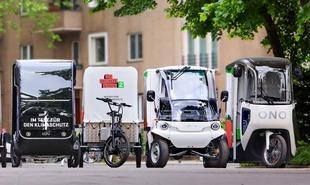
Data from over 100,000 kilometers driven by companies and transport providers using these vehicles were analyzed. The result, according to the German Aerospace Center (DLR) and more than 40 companies from the trades, commerce, and logistics sectors: The vehicles, including the electric light vehicles (LEVs), are cost-effective and environmentally friendly – if used correctly.
Adjust the frame
The researchers identified six key factors that were, and still are, crucial for success in practice. A checklist for implementation and a tool for calculating profitability have also been available online for several days. After a four-year project, the answer was a resounding yes to cargo bikes and light electric vehicles (LEVs). Both economic reasons and benefits for urban dwellers, the climate, and the environment support their use. It is important that the vehicles deployed are adapted to individual operational requirements.
 Photos: DLR
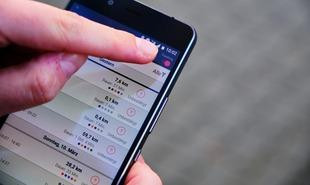
The DLR team tracked the vehicle movements with its mobile large-scale facility "MovingLab" and conducted numerous interviews with users. This allowed the researchers to gain detailed insights into when and why the use of these vehicles is successful – and what obstacles exist.
Six points for the switch
“Our data shows that such vehicles can be very attractive for companies from an economic perspective. At the same time, they have great potential to free our cities from traffic noise, harmful emissions, and congestion. However, they are not a guaranteed success and must be individually selected and deployed for each company,” summarizes Johannes Gruber, head of the project at the DLR Institute of Transport Research in Berlin. “For the first time, we have scientifically identified the success factors for permanently integrating cargo bikes and electric light vehicles into company fleets and replacing, for example, cars or small vans.”
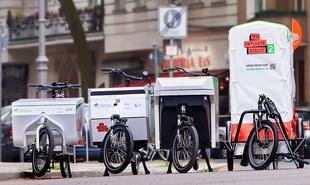
The analysis of the driving data and interviews with the companies revealed a clear pattern: companies that continued to rely on cargo bikes and light electric vehicles (LEVs) after the test had similar experiences. Based on these "best practice" observations, the German Aerospace Center (DLR) compiled a six-point practical checklist.

“What surprised us was the wide range of factors that determined when a usage scenario was a complete success for a company: Some companies used the cargo bike daily with mileages of 30 kilometers or more. Other companies were already completely enthusiastic with four kilometers a day or even just one day of use per week,” says DLR researcher Gruber.
Online calculator
The German Aerospace Center (DLR) provides companies with comprehensive materials to help them make economically viable decisions regarding the purchase and use of cargo bikes and light electric vehicles (LEVs): An online calculator allows users to compare the costs of cargo bikes and LEVs with those of conventional vehicles. This tool also takes into account differences in speed, operating costs, labor costs, and CO2 emissions.
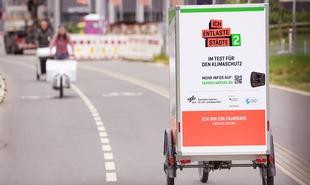
The long-term study now presented, “I relieve cities 2”, built on the findings of a previous project, “I relieve cities (1)”, which, from 2017 to 2020, was the largest cargo bike test in Europe and collected insights from diverse application scenarios.


