«DIRC» supports air traffic controllers
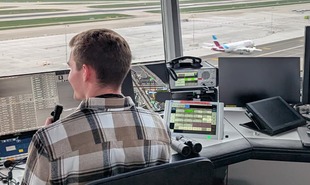
A project by the German Aerospace Center (DLR) on the collaboration between air traffic control operators and AI systems aims to establish safe cooperation between humans and AI. One focus of the research is the air traffic controller DIRC (Digital Interactive Reliable Controller).
 Photos: DLR
Over the past four years, relevant recommendations for the introduction of AI into aviation have been developed in collaboration with national and international companies and research institutions from the air traffic control sector and government agencies. Unlike traditional assistance systems, these new developments can process large amounts of data, be trained on this data, and thus adapt flexibly to new situations. According to Carmen Bruder, scientific director of the project at the DLRInstitute of Aerospace Medicine, they offer the potential to increase the efficiency of air traffic and relieve the burden on highly qualified professionals, while simultaneously ensuring safety, transparency, and human oversight at all times.
AI-powered team partner
The researchers designed a digital air traffic controller, the aforementioned DIRC, as an AI-supported team partner for air traffic control and an intelligent assistance system for pilots, in order to develop recommendations for the safe introduction of trustworthy AI into aviation.
Unlike traditional assistance systems, DIRC not only supports people with information or recommendations, but can also independently take over certain tasks. Dynamic coordination with human guides is possible to determine which tasks should be performed.

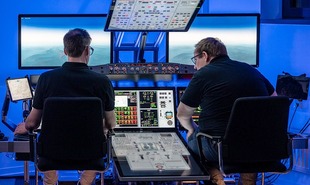
Simulations have shown that human and digital air traffic controllers can efficiently divide their tasks. Together, they can handle up to 25 percent more traffic than the currently defined maximum traffic volume in an airspace sector. This research addresses a key challenge facing European air traffic: increasing traffic volumes coupled with increasingly limited personnel resources in air traffic control.
In addition to the pilot assistance system, the researchers created a demonstrator for supporting pilots in the cockpit with an Intelligent Pilot Assistance System (IPAS).
"Dynamic agreement"
The system is designed to support crews, particularly in time-critical situations, such as selecting alternative flight routes or suitable diversion airports. The AI analyzes large amounts of relevant information and prepares it for decision-making. Simultaneously, the team investigated what information pilots need to understand and confidently evaluate the recommendations of an AI system.
The results will be incorporated into the European discussion on the safe introduction of such systems.
TERMS FROM THE LI GLOSSARY
DLRLI-NEWSLETTER
Every week, the latest logistics news from Switzerland, the EU and the rest of the world.
Subscribe now