Robo-Hub Logistics: North Rhine-Westphalia becomes an innovation engine for robotics in logistics
Automation often ends with order picking, especially with a high variety of items and tasks, as well as at the loading dock and in factory traffic. The new Robo-Hub Logistics HILA, coordinated by Fraunhofer IML, aims to close precisely these gaps: with AI-based robotic systems that learn under real-world conditions, operate safely, and can be integrated into existing logistics processes.
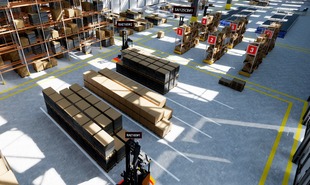
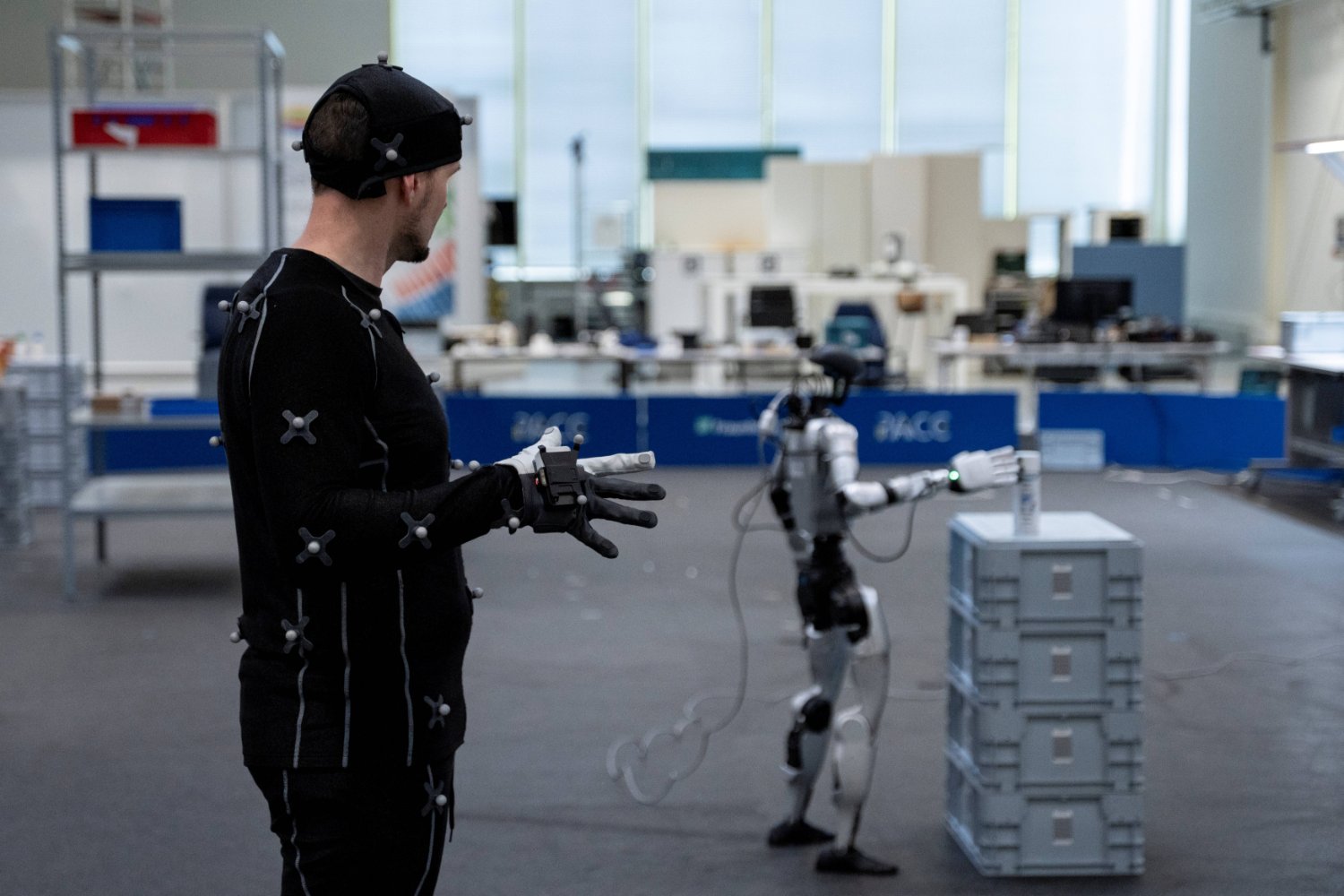 HILA aims to bring AI-based robotics – from autonomous mobile robots to humanoid systems – into practical logistics applications. (Image source: Fraunhofer IML)
FACTS
- Pursue
- Fraunhofer IML (coordination), Fraunhofer IAIS, TU Dortmund, University of Bonn
- Location
- Dortmund, North Rhine-Westphalia
- Theme
- Robo-Hub Logistics HILA – Innovation lab for AI-based robotics in logistics
- In numbers
- Approximately €500,000 in funding, concept phase 1.12.2026 to 31.8.2027
On December 1, 2026, the nine-month concept phase of the project "Robo-Hub Logistics – Hub for Intelligent LogisticsApplications of AI Robotics" (HILA) will begin. In this project, funded by the German Federal Ministry of Education and Research (BMBF), the participating researchers, coordinated by the Fraunhofer Institute for Material Flow and Logistics IML in Dortmund, are developing a concept for an innovation lab in North Rhine-Westphalia. It aims to bring together research institutions, industry, startups, small and medium-sized enterprises (SMEs), and investors.
HILA doesn't just focus on individual robot systems. The goal is flexibly combinable solutions: from autonomous mobile robots and mobile manipulators to humanoid systems. These should be able to perform different tasks, communicate with operational IT systems, and operate reliably even with limited connectivity.
Where work is still done by hand today
The focus of the consortium partners Fraunhofer IML and Fraunhofer IAIS, as well as the universities in Dortmund and Bonn, is on the flow of materials within warehouses, production facilities, and on company premises. Many tasks in these areas currently remain manual: for example, loading and unloading trucks, picking a wide variety of items, handling returns, or inspection and maintenance tasks.
Particularly challenging are the transitions between indoor and outdoor areas, as well as dynamic environments where humans, vehicles, and robotic systems operate simultaneously. Key topics therefore include AI models for handling diverse goods, the collaboration of heterogeneous robot fleets, safe indoor-outdoor navigation, data rooms and simulations, and safety and certification issues.
“We are thrilled to be advancing our vision of AI-based robotics in logistics with HILA. With our strong consortium, we are starting where standard automation solutions reach their limits.”
"Test before invest" for companies
During the concept phase, the consortium is developing, among other things, an access model for real-world laboratories and testbeds, transfer projects based on the "test before invest" principle, training programs for specialists and managers, and approaches for open interfaces and standards. Existing research infrastructures of the partners, including real-world laboratories and simulation environments at the Fraunhofer IML, form the basis for this. More than 50 companies and organizations have already expressed interest in participating in the emerging ecosystem.
"Those who work in construction or in warehouses carry heavy loads every day. At the same time, many companies are struggling to find new recruits. AI robotics can become a tool here – to the benefit of both employees and companies. Our goal is not to replace people with machines, but to make their work easier."
North Rhine-Westphalia does not want to purchase this technology, but rather develop it itself – with its own universities and small and medium-sized enterprises. The Fraunhofer IML in Dortmund demonstrates that this is possible, Neubaur continued.
Concept by the end of August 2027
A technically, organizationally, and economically sound concept for the development and long-term operation of the Robo-Hub Logistics is expected by the end of August 2027. HILA is building on the expertise of the Lamarr Institute for Machine Learning and Artificial Intelligence and the Robotics Institute Germany (RIG). The consortium partners have been collaborating on AI projects at the Lamarr Institute since 2022. Fraunhofer IML and the University of Bonn, with its Cognitive Robotics Lab, are already research partners at RIG. The goal of this new collaboration is to significantly accelerate the transfer of AI and robotics research into practical logistics applications.
The Austrian Federal Ministry for Digital and Economic Affairs (BMFTR) is funding HILA with a total of approximately €500,000 as part of the "Innovation Labs for AI-Based Robotics (Robo-Hubs)" initiative. The project runs until August 31, 2027. HILA is coordinated by the Fraunhofer Institute for Material Flow and Logistics (IML). Other partners include the Fraunhofer Institute for Intelligent Analysis and Information Systems (IAIS), the Technical University of Dortmund, and the University of Bonn.
TERMS FROM THE LI GLOSSARY
AutomationdockFactory trafficConcept phase (logistics project)logisticsBMFTRLI-NEWSLETTER
Every week, the latest logistics news from Switzerland, the EU and the rest of the world.
Subscribe now