No "off" for the barcode
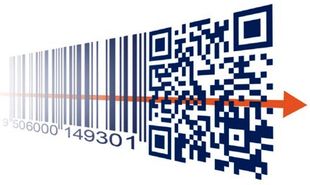 Image: GS1 Switzerland
Shortly after the 50th anniversary of the barcode, interpretations suggesting the imminent demise of the EAN/UPC barcode have met with little enthusiasm at GS1 Switzerland. The company stated that, starting in 2027, retailers will also be able to use 2D codes such as the GS1 Data Matrix or QR code.
GS1 Global already decided this at its 2021 Annual General Meeting, the media office in Bern clarifies. EAN/UPC barcodes will continue to be used in retail long after 2027. "The goal was simply set that by 2027, checkout systems should be able to read and process 2D codes such as GS1 DataMatrix or QR codes with GS1 Digital Link as a replacement for, or in addition to, EAN/UPC barcodes." From then on, users will be able to choose which type of code they want to use to label their products.

Various media outlets, both domestic and international, have reported that "barcodes (...) will be completely replaced by 2D codes within just a few years." GS1's response is a clear "no": "The aforementioned 2D codes supplement or replace the conventional EAN/UPC barcodes where desired and necessary."
Furthermore, it is by no means the case that conventional barcodes (...) are incapable of storing sufficient amounts of data to meet current requirements.
While it is true that additional information such as batch/lot/lot numbers, best-before dates, or serial numbers cannot be encoded within them, article number (GTINthe existing EAN/UPC barcodes are "perfectly adequate"
If there is no need to represent additional information, it is not a problem for EAN/UPC barcodes and 2D codes to continue to be used side by side. "The relevant GS1 identification keys will continue to be issued long after 2027."
To read and process 2D codes, image scanners are required instead of laser scanners. Most point-of-sale systems can already read 2D codes. Depending on the initial setup, the transition may require adjustments to hardware and software.
The claim that "only 2D codes will be permitted from 2027 onwards" is misinformation. According to sources in Bern, if all companies worldwide were to decide to use only 2D codes, this would necessitate a further adjustment of the GS1 standards, which already allow for the aforementioned options. The decision ultimately rests with the user.
In principle, this is not a "revolution" but an "evolution"—a development to address consumer demands for more product information while simultaneously meeting the needs of partners in the supply chain.
www.gs1.ch
LI-NEWSLETTER
Every week, the latest logistics news from Switzerland, the EU and the rest of the world.
Subscribe now