Secure remote access more strictly
SSI Schäfer remains particularly committed to cybersecurity – and in this context also to the explicit safeguarding of remote access for maintenance and support – through a virtual desktop infrastructure, two-factor authentication and privileged access systems.
 Fig.: SSI Schäfer
Cyberattacks are on the rise and, in the worst-case scenario, lead to costly outages. Legally, plant operators are also obligated, for example through the new NIS2 directive and industry-specific compliance regulations, to secure their systems accordingly and make them transparent.
Traditional remote access solutions like virtual private networks (VPNs) reach their limits here. SSI Schäfer has therefore developed a new Secure Remote Access concept that meets the highest security requirements. Comprehensive identity and access management reliably protects sensitive data and ensures compliance with legal regulations. The new solution enables service teams to have privileged remote access, while simultaneously providing transparency for the customer – thus raising not only information security but also plant availability to a new level.
Privileged Access Management
Security risks can be minimized in the future with the help of a new category of remote access solutions : According to a forecast by the market research institute Gartner, a so-called Remote Privileged Access Management (RPAM) system can reduce the risk burden by up to 50 percent. RPAM combines a uniquely verified identity with strictly controlled access to precisely defined applications or systems. At the same time, the endpoint used is checked for compliance with security standards before access is granted, for example, regarding patch levels, active virus protection, and system configuration.
This ensures that only authorized personnel with trusted devices can access critical systems – fully auditable and time-limited. SSI Schäfer also utilizes this innovative approach for its new Secure Remote Access solution, enabling the intralogistics expert to offer even more secure and flexible customer service.
 A.Spic
“Unlike conventional VPN solutions, which may allow access to the entire corporate network if poorly configured and lacking segmentation, our Secure Remote Access offers granular control.”
The complementary Remote Privileged Access Management system strictly regulates access to sensitive systems and data according to a "zero trust"principle. Whether internal technicians, administrators , or external service providers: only verified identities are granted access – and exclusively to clearly defined resources, limited to the necessary minimum. All connections are fully documented and continuously monitored.
Expert support
“Our new solution provides significantly greater clarity and thus reduces both legal and operational risks.” SSI Schäfer intensively tested its Secure Remote Access solution in a series of proof-of-concept projects over several months. The result is a flexibly adaptable security concept that integrates seamlessly into existing processes and meets industry-specific requirements. A key principle is that SSI Schäfer only gains access to a customer system when absolutely necessary, authorized by the customer, and explicitly requested.
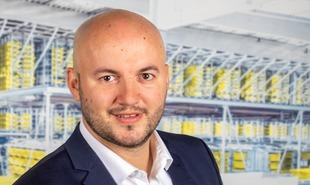
Admir Sipic graduated from the HigherTechnical College (HTL) Grazwith a specialization in Computer Engineering and subsequently earned a Bachelor of Science (BSc) in Industrial Management in Kapfenberg. In 2010, he began his career at SSI Schäfer as an IT technician in the remote support department of the Customer Services business unit in Graz. Five years later, he assumed responsibility for the entire department as Head of Remote Support in Graz. Since 2020, Admir Sipic has been responsible for remote services globally and holds the job title of VP Global Head of Remote Services at SSI Schäfer.
LI-NEWSLETTER
Every week, the latest logistics news from Switzerland, the EU and the rest of the world.
Subscribe nowYou might also be interested in this