Linde: Storage systems that grow with you
Linde Material Handling is launching two scalable storage systems: the Linde S-MATIC cube shuttle warehouse for pallets and the Linde S-MATIC bin for picking small parts. Both can be expanded incrementally as the business grows.
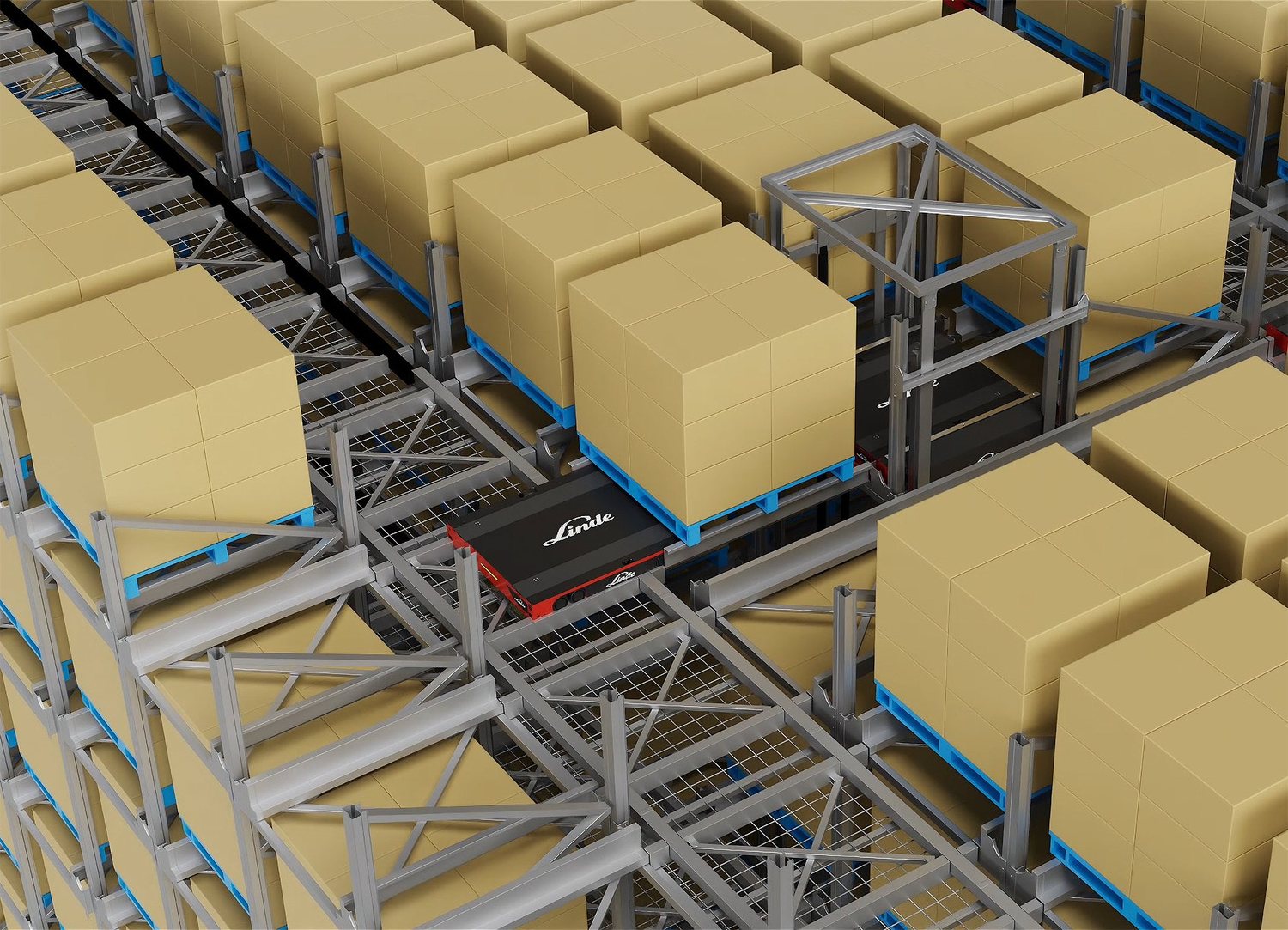 The Linde S-MATIC cube is a space-efficient pallet shuttle system. It is also suitable for existing buildings and cold storage facilities. (Image source: Linde Material Handling)
FACTS
- Pursue
- Linde Material Handling (KION Group)
- Location
- Aschaffenburg (Germany)
- Theme
- Scalable storage systems S-MATIC cube (pallets) and S-MATIC bin (small parts)
- In numbers
- Pallets up to 1500 kg, up to 600 positions per hour and station
Lack of space, outdated storage technology , or the desire to better utilize existing areas: Anyone investing in warehousing today wants to keep as much flexibility as possible for the future. Predicting sales of individual products is nearly impossible – especially for e-commerce providers and logistics companies with small product ranges and highly fluctuating order volumes. Others are looking for spare parts for older storage and retrieval machines or simply don't have enough space.
"With the Linde S-MATIC cube and the Linde S-MATIC bin, we are expanding our portfolio and covering a broader range of customer requirements and storage applications."
Shuttle storage for pallets up to 1500 kg
The S-MATIC cube is a shuttle warehouse for pallets up to 1500 kg, housed in a custom-built racking system. Four-way shuttles move pallets within a single level, while two-way shuttles act as lifts for transfers between levels. The shuttles require only the space of a pallet position, saving space compared to conventional elevators and allowing for high storage density. As business grows, throughput increased with additional shuttles, regardless of the warehouse capacity. Additional storage channels further increase the number of pallet positions.
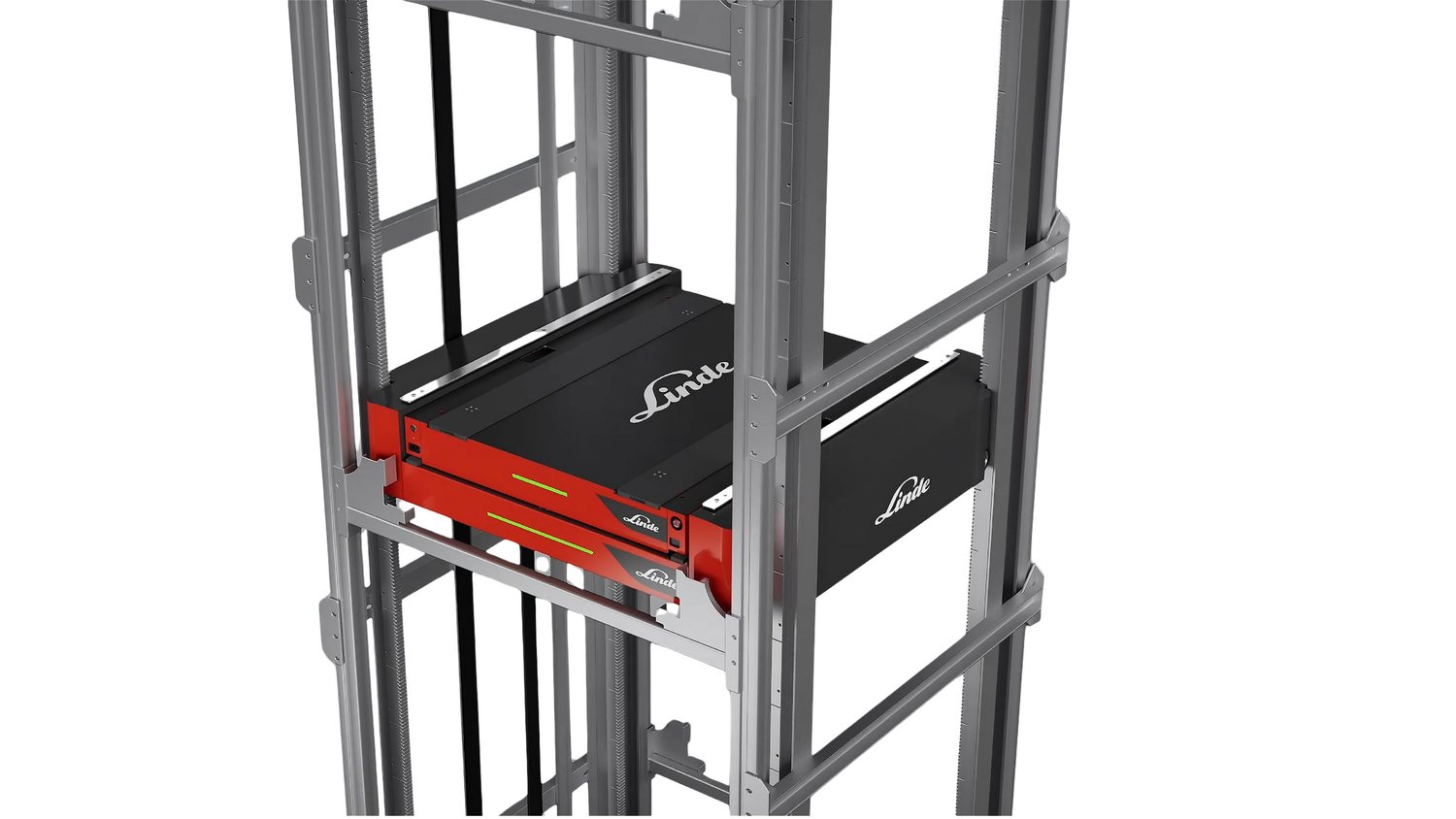 Four-way shuttles move pallets within a single shelf level, while two-way shuttles act as elevators between levels. (Image source: Linde Material Handling)
Also for existing buildings and cold storage facilities
The Cube can also be integrated into existing buildings, so-called brownfields. A standard concrete floor is sufficient; a load-bearing building envelope is unnecessary because the system is self-supporting. Since it is built almost to the ceiling, it makes optimal use of the available space. According to Campbell, a ceiling height of just eight meters can be enough; depending on the project, up to ten levels and a height of 40 meters are possible. Due to the high storage density, the solution is also suitable for deep-freeze storage: less air volume per square meter means less cooling effort and lower operating costs.
Because the shuttles are designed with redundancy, the entire system does not shut down during maintenance or replacement of a single shuttle, unlike with conventional storage and retrieval machines. The precision steel rack is designed for decades of operation, the shuttles are relatively inexpensive, and they are easy to replace when worn.
AI selects the storage location
High throughput is ensured by AI-supported pallet allocation in the "Linde Warehouse Manager" software. It automatically selects the best location for each pallet from countless possibilities, thus optimizing rack occupancy and preventing pallets from being blocked. The same applies to retrieval. Interfaces allow the system to be integrated into existing ERP and WMSsystems and connected to downstream processes using automated guided vehicles (AGVs) or manual forklifts.
There are three options for connecting to order picking or production: roller conveyors to a stationary conveyor system, direct transfer by industrial trucks such as laser-guided vehicles, or order picking directly beneath the warehouse. In the latter case, the racking is located one floor higher, and autonomous mobile robots collect the pallets and transport them to the picking zone. The pallet warehouse serves as a buffer in this process.
"All this on the same footprint"
Small parts: Robots instead of fixed conveyor technology
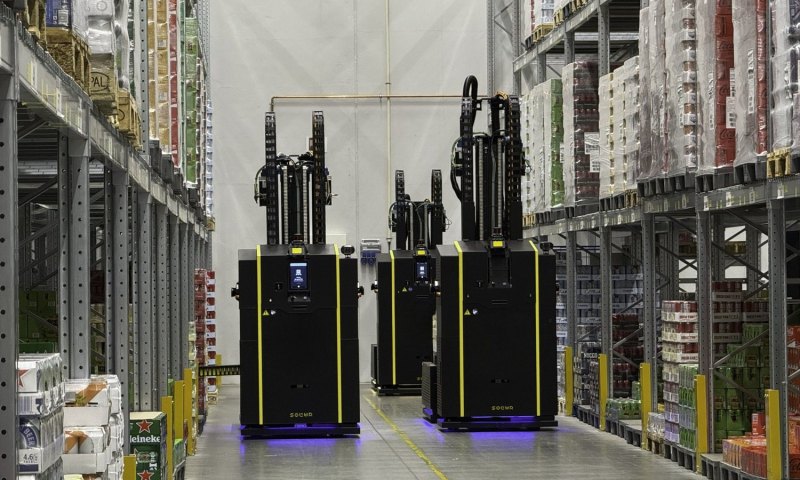
The S-MATIC bin is designed for picking small parts. Picking robots travel along the racks and retrieve containers, while mobile bin movers transport them to workstations via flexible routes. These workstations can be configured as needed, for example, for repacking containers, exchanging full containers for empty ones, or mixed picking from containers and pallets, also incorporating put-wall systems, racks, or conveyor belts. Linde MH cites speed, compactness, comparatively low initial investment, and high flexibility and scalability as advantages.
The system stores containers in racks up to twelve meters high and five times deep. Depending on the application, 400 to 600 order positions per hour and station are possible, up to 300 percent more than with manual systems. The bin movers travel at speeds of up to 4.5 m/s and operate for up to eleven hours on a single battery charge. Equipped with various grippers, the system handles cartons, containers, or trays up to 800 × 600 mm. Because all components can be expanded incrementally, it is also suitable for SMEs and rapidly growing e-commerce providers with a wide variety of products.
“If throughput or picking volume increases, additional mobile robots can be put into operation,” explains Vincent Tee, AMR/bin Solutions & Sales Manager at Linde MH.
TERMS FROM THE LI GLOSSARY
order pickingStorage technologythroughputStorage capacityOperating costsOutsourcingLI-NEWSLETTER
Every week, the latest logistics news from Switzerland, the EU and the rest of the world.
Subscribe now