Pallet market under pressure
Circulating in the millions, Euro pallets are an integral part of everyday life in industry, trade, and logistics. However, A and B grade pallets are becoming increasingly scarce, warns the logistics provider Dachser. This has repercussions for costs, planning reliability, and delivery capacity along the entire supply chain.
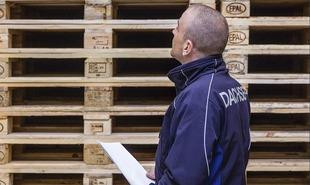
Today's pallet cycle is a finely balanced exchange system, but it is increasingly coming under pressure. Depending on the region, there are significant differences in pallet availability – sometimes even leading to a genuine shortage.
The classic 1:1 exchange at the loading dock – pallet with goods for empty pallets–haslargely become obsolete, especially at the central warehouses of large retailers. Instead, balancing is increasingly handled via pooling service providers such as CHEP, IPP, LPR, PAKi, inter.PAL, or DPL. They maintain pallet accounts and have established clearing systems with credit notes.
Dachser also collaborates with such service providers. "Booking instead of driving has many advantages. However, if the physical return is decoupled from the accounting process, this is offset by a systemic disadvantage," says Philipp Kreuzer, Department Head of Packing Aid Management at Dachser.
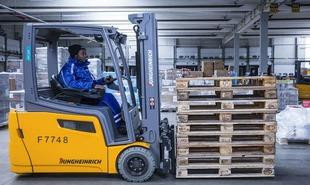 Photos: Dachser
A balance in the account is ultimately no substitute for a pallet that is actually available, of the right quality, in the right place, and at the right time. "This is precisely where delays, a quality mismatch, and the need for additional control arise."
The full report by Marcus Schick is available here.
LI-NEWSLETTER
Every week, the latest logistics news from Switzerland, the EU and the rest of the world.
Subscribe now