AI is driving visual systems forward
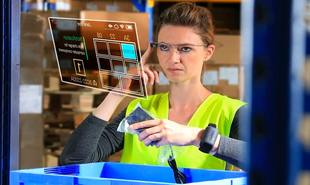
Visual signals combined with AI will logisticsapplications in the areas of healthcare, safety, operations, asset management, and shipping . This is the conclusion of the DHL trend report "AI-Driven Computer Vision," published today.
The combination of human expertise and AI augmentation, however, is challenging and requires thoughtful coordination and cooperation. The market for computer vision is growing. According to expert estimates, DHL states that revenue will quadruple from €8.8 billion in 2020 to an expected €39 billion in 2030. This suggests that computer vision will become an integral part of standard logistics processes within the next five years. The study illustrates how computer vision is used in various sectors, such as retail, healthcare, manufacturing, and disaster relief, and also highlights diverse applications in the transportation industry.

"Everything indicates that it will become a promising, industry-defining technology along the entire supply chain."
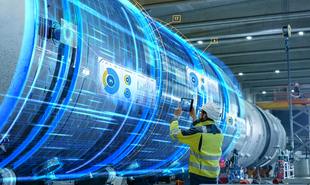
Computer vision enables computers and systems to extract meaningful information from digital images, videos, and other visual data. These systems are then able to take action or make recommendations by using algorithms to classify and evaluate the visual data.
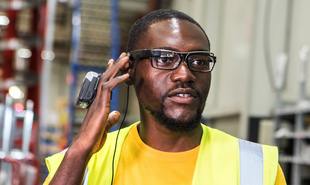 All photos: DHL
DHL's Head of Development, Klaus Dohrmann: "In the logistics industry, we are seeing the first use cases that demonstrate the value of computer vision. These include various health and safety applications, as well as the dimensioning of shipments. With technological advances in depth perception, 3D reconstruction, and the interpretation of dark and blurry images, computer vision will open up many more possibilities and bring additional advantages."
Challenges and concerns
Computer vision is a promising technology, but it also presents challenges and raises concerns. These include, for example, public acceptance, especially among people who fear constant surveillance. Cybersecurity is also crucial with regard to data handling and data protection laws.
www.dhl.com
|
Applications in the logistics industry
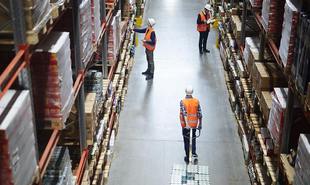
Occupational health and safety: Computer vision can identify potential hazards in warehouses, depots, and other logistics facilities, thereby minimizing risks, preventing accidents, and improving workplace safety. Computer vision can also positively impact employee health: The technology detects incorrect postures and movements, identifies early signs of fatigue, and monitors whether employees are wearing the correct protective equipment and complying with regulations.
Operational use: Computer vision can analyze and visually represent work processes in a plant or on open ground. It can even take over security functions by immediately detecting unauthorized entry or break-ins.
Asset management: Computer vision helps to consistently monitor logistics facilities and alert maintenance teams before problems occur. Even if malfunctions have already occurred, computer vision can automatically detect likely errors and anomalies, simplifying damage identification.
Shipment processing: Computer vision can automate and simplify the dimensioning process in shipping, where precise measurements of object areas or volumes are required for calculating storage capacities, loading planning, transport logistics, and shipment invoicing. The technology can also verify that shipments comply with regulations and are correctly categorized for sorting. Furthermore, it can automate inventory cycles. |
Download the trend report here
LI-NEWSLETTER
Every week, the latest logistics news from Switzerland, the EU and the rest of the world.
Subscribe now