 Photo: Swissmem
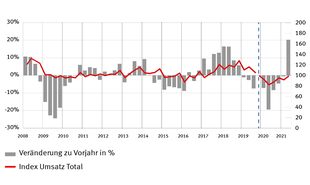
The situation for the majority of the Swiss mechanical, electrical, and metal (MEM) industries has improved significantly. Order intake increased by 24.4 percent compared to the previous year. To ensure electricity supply in the coming years, into "nuclear reactors" should continue.
Swissmem reports that the very strong order intake indicates that sales in the MEM (mechanical, electrical, and metalworking) industry will exceed pre-crisis levels in the second half of the year. Furthermore, key indicators point to continued positive development. Risks include the uncertain relationship with the EU and the ongoing trade conflict between China and the United States.
Domestically, following the rejection of the CO2 law before the end of the year, transitional legislation is needed to continue the target agreement system. In parallel, must Parliament should rely solely on incentive taxes to avoid additional burdens for the population and businesses. Furthermore, it should refrain from creating any new subsidy programs.
 Graphic: Swissmem
Closely linked to climate policy is the challenge of ensuring an uninterrupted electricity supply at all times. To prevent a winter power shortage from 2030 onwards, Swissmem is calling for a political commitment to existing nuclear power plants, so that operators can keep their plants online for at least 60 years (currently 50 years), provided they remain. is needed also The expansion of secure winter power generation capacity According to the MEM association, "all climate-neutral technologies should be considered as possible options."
In the first quarter of 2021, 313,500 people worked in the MEM (mechanical, electrical, and metalworking) industry. Swissmem expects the number of employees to increase in the coming months due to positive business developments.
Exports from the MEM (mechanical, electrical, and metalworking) industries reached a value of CHF 33.4 billion (EU +21% / USA +12.1% / Asia +8.4%). All product groups benefited from the upswing. Exports of metals rose by 25.2 percent, precision instruments by 13.8 percent, electrical engineering/electronics by 12.0 percent, and mechanical engineering by 10.5 percent.
What's next for climate policy?
Switzerland, it is argued, urgently needs a climate policy aligned with political feasibility following the rejection of the CO2 law. The target agreement system has proven that the CO2 emissions of industrial companies can be substantially reduced without impairing their international competitiveness. Swissmem member companies alone have their CO2 emissions by 56 percent since 1990. reduced, according to the still-valid CO2 law, is only valid until the end of 2021. For Martin Hirzel, President of Swissmem, the conclusion is clear: "Parliament must pass transitional legislation this fall that continues the target agreement system. Otherwise, companies face significantly increased production costs starting next year. This would be a massive breach of trust towards companies that have made substantial investments to reduce their CO2 emissions."
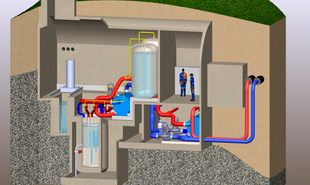 Finnish design for a mini-reactor. Image: Lappeenranta University of Technology
Swissmem makes the following demands:
- Switzerland gives one of the highest CO2 levies in the world. "This maximum will not be increased further."
- Equal treatment of fuels and heating oils is essential. Therefore, the CO2 levy should be extended to include fuels. This would result in an increase in gasoline and diesel prices, taking into account existing traffic-related burdens (e.g., the heavy vehicle fee). For this to have any chance of public support, the levy must be fully refunded to the population and businesses. Furthermore, the implementation of this equal treatment should be phased in so that citizens can adjust their investment plans accordingly from the outset.
- Research and innovation are crucial for achieving decarbonization. Since the public does not want, should be avoided. Instead, existing and proven government instruments must receive increased funding. Accordingly, funding for Innosuisse should also be raised.
In this context, Swissmem considers it wrong to pit renewable energies and nuclear power against each other. According to Hirzel, the federal government and ETH Zurich should also monitor the latest developments in nuclear technology and continue teaching and research in these areas. This applies not only to safety aspects but also to small modular reactors. Fora complete decarbonization of the economy and society, all climate-neutral technologies are needed.
www.swissmem.ch