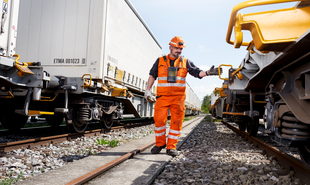
 Vehicle inspection.
Swiss Federal Railways (SBB) is focusing on increasing rail freight. With "Suisse Cargo Logistics," it is laying the foundation for a logistics system that will become even more efficient and automated. By 2050, 60 percent more freight could be transported by rail. The plans include five new terminals and up to eight city hubs.
For insiders, it's almost common knowledge: the transport of large and heavy goods is steadily declining, while the transport of smaller, lighter goods is increasing. This is also reflected in the desire of freight customers for flexibility, speed, and digital services. At the same time, demand for environmentally friendly, CO2-neutral, and energy-efficient transport is rising. As a result, new solutions are needed in rail freight.
"The goal is to make better use of the rail system for logistics in Switzerland," said Monika Ribar, Chair of the Board of Directors of SBB, at a press conference in Bern. "We want more rail for more goods." With this, SBB is creating the foundation for efficient, automated, and sustainable logistics in Switzerland and strengthening security of supply. SBB CEO Vincent Ducrot added: "We want to utilize the rail infrastructure and land,
combine rail and road, and complement the existing freight transport services."
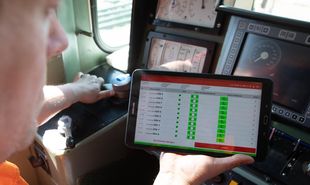 Digital on the Rails:
To optimally combine rail and road transport, plans are in place to expand the transshipment network with five terminals for combined transport between Geneva and St. Gallen. Furthermore, existing freight facilities with rail connections in major Swiss cities are to be developed into five to eight city hubs at central locations, particularly for construction and waste management logistics. This will also help to reduce traffic congestion in the cities themselves. Existing loading points (including open loading) will remain integrated.
Block train services enable freight customers to transport large quantities point-to-point directly from the shipper to the recipient. Combined transport ensures the seamless integration of road and rail.
Single wagonload traffic forms the core service and secures the existing transport volume. However, it cannot be operated profitably. Subject to political decisions regarding the scope and quality of funding, it is to be strengthened as network traffic and allow for broader access.
The rail fleet is to be modernized through investments and automation, such as automated brake testing and digital automatic coupling. The financing of the facilities for "Suisse Cargo Logistics" is provided through existing federal funding instruments and investments by SBB (Swiss Federal Railways). SBB anticipates costs of one billion Swiss francs for terminals and city hubs and around 500 million Swiss francs for the automation of its vehicle fleet by 2040. SBB offers non-discriminatory access to facilities and infrastructure to third parties.
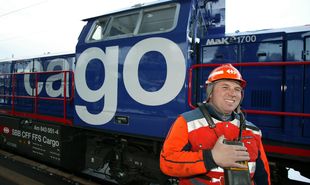 Photos: SBB.
SBB intends to continue operating rail freight in Switzerland not alone, but in partnerships with other logistics providers or in the operation of terminals. SBB is relinquishing its minority stake of just under 2 percent in "Cargo sous terrain" to focus on its core mission and strengths.
In the coming months, SBB will further develop "Suisse Cargo Logistics" in close consultation with industry stakeholders, cantons, and municipalities, and in line with political decisions. It aims to commission the first high-capacity terminal on the east-west axis before 2030.
With "Suisse Cargo Logistics," road freight transport will grow by only 14 percent by 2050, instead of the previously projected 22 percent. This would correspond to annual savings of 1 million truck journeys, 470 GWh of primary energy, and 26,000 tons of CO2.
Shippers without their own rail sidings gain new climate-friendly shipping options thanks to combined transport services; larger cities and cantons are relieved of congestion at their city limits.
www.sbb.ch