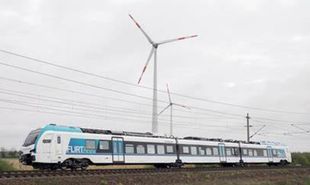
Stadler, in collaboration with the German Aerospace Center (DLR), is developinga flexible battery system with varying performance characteristics for passenger trains. in a project called MOSENAS will initially A demonstrator of this scalable concept be created.
As announced, this is a modularly scalable battery system for battery-powered multiple units, whose performance and capacity can be adapted to typical route-specific operating scenarios. The integration of renewable energies is intended to support sustainable rail operations.
with MOSENAS ("Modular Scalable Energy Storage for Sustainable Rail Passenger Transport") Trains equipped are intended particularly suitablewhere battery-electric operation was previously uneconomical or technically impossible. The battery systems can be specifically tailored to vehicle schedules, operating hours, and existing charging infrastructure. This allows for optimization of the expected lifespan of the battery systems.
As is well known can be equipped with overhead lines for technical and , are a suitable climate-friendly alternative to diesel propulsion on non-electrified or partially electrified lines which can be recharged intermittently. The trains should be able to be quickly recharged at charging points in stations, depots, or on overhead line sections. The charging processes should place as little strain on the existing power grid as possible.
So andbalancebuffer -called second-use batteries in stationary storage systems could also peak loads at charging points. These are batteries that no longer have their full capacity due to aging. While they are no longer suitable for use in vehicles, they can be used, for example, as intermediate storage in charging infrastructure.
The Federalof Transportis supporting the projectwith million €