The US Federal Aviation Administration (FAA) issued regulations mid-week for the qualification and training of pilots who will be allowed to fly air taxis in the future. It is described as "the first completely new category since the introduction of the helicopter in the 1940s.".
Motorized transport aircraft operating under the umbrella of AdvancedAir Mobility( AAM) include air taxis, such as the German Volocopter, cargo transport aircraft, and a wide range of missions in urban and rural areas. The authority created this regulation to subject instructors and pilots to a uniform set of rules, enabling them to operate aircraft of this category—"motorized transport aircraft"—within its jurisdiction. These aircraft exhibit characteristics of both airplanes and helicopters. The regulation also addresses operational requirements, including minimum safe flight altitudes and required visual range.
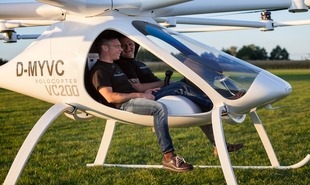
The US authority is considered an important body in this matter. Generally, aviation authorities in most countries follow the recommendations of US experts. This regulation is seen as the final piece of the puzzle for the safe introduction of these aircraft in the near future.
The potential uses range from transporting passengers in urban areas and short-haul missions such as air ambulance services and cargo operations to the potential provisioning of services to smaller communities over time. The FAA is considered the global benchmark for measures affecting air traffic safety and is also responsible for aircraft accident investigations.
"The FAA will continue to prioritize the safety of our system as we work to seamlessly integrate innovative technologies and procedures. This final ruling provides the necessary framework to enable the safe operation of powered takeoff and landing (PTO) aircraft in our airspace," said FAA Administrator Mike Whitaker.
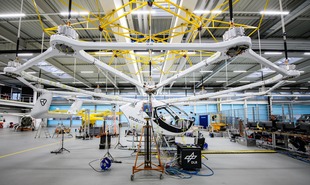 Vibration tests at the DLR
“Powered takeoff and landing aircraft are the first new aircraft category in almost 80 years, and this historic regulation will pave the way for future large-scale Advanced Air Mobility (AAM) operations.” The German Aerospace Center (DLR) also recently conducted tests on the vibration behavior of such copters to ensure maximum safety for flights over urban areas.
The FAA had decided it could certify powered takeoff and landing (AAM) aircraft using existing regulations and update other regulations to allow air taxis to operate commercially. Last year, the agency released a draft regulation for the operation of powered takeoff and landing vehicles, which is now a key element in the further development of the overall AAM concept.
Existing rules adapted
A new pilot training and qualification regulation was needed because existing regulations did not account for this new aircraft category, which can take off and land vertically like a helicopter and cruise like an airplane. The regulation provides a comprehensive framework for the certification of the first cadre of instructors and pilots.
It modifies numerous existing regulations and establishes a Special Federal Aviation Regulation (SFAR) with new requirements to facilitate the certification and training of instructors and pilots.
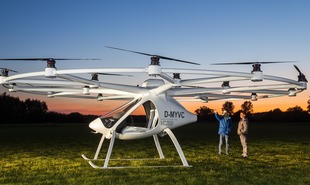 Photos: Volocopter / DLR
It also adapts operational requirements for helicopters to some flight phases of the new type of aircraft and allows pilots to train with a single set of control instruments in the powered lift range; older rules still require two flight controls – one for the student and one for the instructor.
klk.