Toyota Material Handling Europe TMHE has reduced the CO₂ footprint of its LHM230 hand pallet truck by 18% from cradle to gate by using SSAB Zero steel from the Swedish steel company Svenskt Stål AB for the forks and frame.
 Reduced CO₂ footprint
This step is an important milestone on the way to the company's goal of achieving " net zero " emissions along the entire value chain by 2041. Conventional steel production generates significant CO₂ emissions, which can be considerably reduced with SSAB steel.
“We are combining SSAB’s expertise in CO₂-reduced steels with our goal of reducing emissions along the entire value chain”says Camilla Åkerman, Program Manager Fossil-Free Products at Toyota Material Handling Europe.
Starting with the LHM230
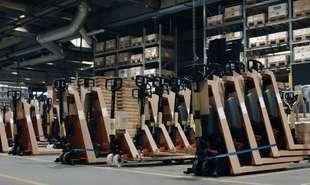
To maximize CO₂ reduction, SSAB and Toyota Material Handling have launched their collaboration using the high-selling Toyota Lifter LHM230 hand pallet truck. Both the forks and frame of this model are manufactured from SSAB Zero steel. This steel is also used in the production of the forks for three electric Toyota BT Levio pallet trucks – the LWE130, LWE140, and LWE160.
“By using SSAB Zero, we reduce emissions in the forks and frames of our hand pallet trucks by up to 75%. This corresponds to a decarbonization of the entire product by 18%”explains Per Fyrenius, Senior Vice President Corporate Development at Toyota Material Handling Europe.
18% less emissions
“The biggest challenge was verifying the material. A robust plan was needed to ensure the required performance. That was a challenge, but the results were very positive”said Camilla Åkerman.
For SSAB, the partnership is proof that low-emission steel can seamlessly replace conventional steel grades without compromising on quality.
 The same strength. Photos: TMHE/SSAB
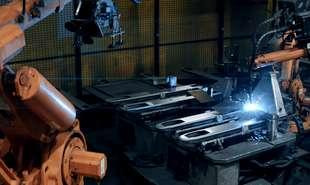
“SSAB Zero meets the same high quality standards as conventional steel: the same strength, durability and reliability”confirms Matts Nilsson, Sales Manager at SSAB Europe.
Toyota Material Handling Europe produces around 80,000 manual pallet trucks and 15,000 electric pallet trucks annually. The company sees its partnership with SSAB as an important stepping stone in its long-term decarbonization strategy.
Other possibilities
Encouraged by the results, Toyota Material Handling Europe now wants to explore further opportunities to use low-CO₂ materials across its entire product portfolio.
Officially, fossil carbon emissions during the production of SSAB Zero are less than 0.05 kg CO₂e per kg of steel.