The Swiss Service Association (SKDV) is considered the leading Swiss network for specialists and managers in technical customer service. With around 200 members in Switzerland and strong international partnerships – including the Swissmem Academy, the Technical Customer Service Chamber (TKK), and the Zurich University of Applied Sciences (ZHAW) –
The German KVD and the Austrian KVA – the association is committed to service quality, innovation and practical training.
The SKDV (Swiss Association of Service Technicians) will once again be present as an association partner at "maintenance Schweiz 2026" from August 26th to 27th at the Zurich Exhibition Center. In a trend interview, President Thomas Seiler discusses the major trends in the Swiss service sector, the role of artificial intelligence, the value of after-sales service in economically challenging times, and whether "service technician" is a profession with a future.
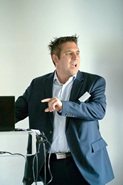
Mr. Seiler, the SKDV has been connecting specialists and managers in technical customer service for years. What are the association's core tasks today?
Thomas Seiler: We see ourselves as a cross-industry link in technical customer service – a place where people can exchange ideas openly across sectors. What always fascinates me is that customer service and support raise the same fundamental questions in every industry. Whether it's manufacturing, medical technology, or building technology – the topics are comparable, the challenges are similar. That's the real added value of our network. Of course, we're also directly available to our members and support them in all association matters – from further training and the exchange of experience to representing their interests within the industry.
What new developments or strategic advancements can SKDV members and the service industry expect in 2026 – and what should maintenance and service providers also be aware of?
The defining theme is undoubtedly artificial intelligence. AI has a tremendous impact on our industry, which is certainly causing some uncertainty. Strategically, we see it as our responsibility to position AI not as a threat, but clearly as a powerful tool. Those who understand AI as an assistant can become faster, more precise, and more efficient in service and maintenance. Speed is crucial, especially in maintenance: the faster a machine is back up and running, the better it is for the manufacturer or operator. Our message to the industry is therefore: actively use AI, familiarize yourselves with it – it's an opportunity, not a risk.
How exactly does AI play a role in further education?
AI is an exceptionally valuable tool in education and training, but it must be used correctly. Learning transfer becomes challenging when AI is simultaneously working with both learners and providers. Take our example: the newly launched course for heads of technical customer service. There, we now work almost exclusively with simulations. We recreate real-life situations from everyday work with the support of AI and make them directly tangible for the participants. The goal is to prepare learners as effectively as possible for what awaits them in the field. Competencies are in demand; knowledge is readily available and no longer the focus of education.
Furthermore, AI is an integral part of the advanced professional examination "Head of Technical Customer Service with Federal Diploma", right?
Absolutely. It starts with digital training and skills development: How do we handle AI within our own organization? Which data are we allowed to share, and which are we not? These are key questions that we explore together with our participants. At the same time, we use AI didactically to improve the training itself and make it more relevant to real-world situations. The two are inextricably linked.
Do you have a specific practical example of this?
With pleasure. Let me share an example from my own experience. I called my telecom provider because my TV kept stuttering. An AI bot answered the phone and politely asked about the problem. I described the picture stuttering – and the answer came promptly: "Great, just turn up the volume, and it will work again." Then the call hung up... This is an extreme example, but it clearly illustrates the point: AI must be used in a way that truly helps customers and doesn't frustrate them. Humans remain central. AI is already useful and widespread today in areas such as initial diagnostics over the phone, scheduling and dispatching service technicians, internal training, and knowledge management: When technical documentation, machine data, and parts lists are scattered across different platforms, AI can consolidate them and provide the technician with the right answer directly in the field. This is already working in numerous large companies.
Continuing education is a core concern for the members of the Swiss Service Association. With the revised modular course leading to the advanced professional examination "Head of Technical Customer Service with Federal Diploma," you sent a clear signal at "maintenance Switzerland 2025." How is this offering being received by the industry?
The landscape of continuing education is vast – and that's precisely why this specialization is so important. We see in numerous companies that service is gaining in importance and after-sales is becoming a strategic priority. But the managers in these roles are mostly long-term employees who have risen from service technician to management position – without having completed formal business or management training. This course addresses that gap. Anyone who has to deliver under pressure, make sound business decisions, and lead a team needs in-depth expertise. Then there's the issue of succession: Experienced service managers are retiring, and their successors need to be brought up to that level quickly. Our modular course offers flexible entry points. That's exactly what the industry needs.
Service is becoming increasingly digital: field service management, IoT, AI/data-driven diagnostics, remote support, smart maintenance. How does the SKDV (Swiss Association of Service Providers) successfully build a practical bridge between industry, technology, and IT/AI for its members?
We asked ourselves this question and fundamentally redefined our event format as a result. What we offer today follows a clear image: the tree. The roots represent the core competencies that every specialist and manager in technical customer service needs – be it in the field of AI, soft skills, business administration, or employee development. We no longer present best-practice examples that are not applicable to most participants the next day. Our goal is different: At every event, participants take away a directly applicable impulse – a concrete leaf of this tree that they can immediately implement in their own company. Away from watching, towards applying.
"Service is sales." This statement sounds simple, but it requires a change of mindset in numerous companies. How can technical customer service actively contribute to increasing sales?
This requires customer service specialists who think like businesspeople and can consistently develop service business cases. This leads us directly back to training and professional development. But let me expand on the idea that "service is sales": Today, we increasingly talk about after-sales, meaning all interactions with customers after the sale. This means that after the initial sale, the service department supports the system from commissioning to end-of-life and then sells the next device. There's a wise saying: "Sales sells the first system, service sells the second and third," because it's the service department that has cultivated the customer relationship over the years. This strong relationship is the decisive factor. And from a business perspective, service is generally more attractive than the initial sale: A higher margin can usually be achieved in service – if done correctly.
In economically challenging times, the after-sales sector regularly comes under pressure or suddenly becomes a strategic priority. What are you currently observing in Swiss industry, and what advice do you have for your members?
Management is generally familiar with this pattern: when sales falter, after-sales service steps in. Service runs smoothly because it consistently generates revenue, while new business weakens and equipment or systems are operated longer than planned. Thus, in a "crisis," customer service is often the department that keeps the company afloat. The current economic situation cannot be described in general terms in this context: there are sectors under severe pressure, while others in Switzerland are barely affected. My firm conviction is that service should not be strengthened only after a crisis has already arrived. Those who consistently build up their after-sales service during good times – profitably, scalably, and with a strong position in company management – are simply more resilient in difficult times. This is precisely where the SKDV supports its members.
Does the profession of "service technician" have a future? Or is it changing so fundamentally due to digitalization and AI that we actually need to talk about a new profession?
I am convinced that the service technician profession has a bright and successful future. They are the ultimate all-rounder: mechanical, electrical, pneumatic, hydraulic, IT-related, and brand ambassadors to the customer. They are the ones on-site when things go wrong, presenting solutions and reassuring customers. And precisely because automation and digitalization are increasing, there is a growing need for skilled professionals who understand and master this field. What concerns me, however, is another phenomenon: 360-degree thinking – holistic, cross-system understanding – is declining. More and more people are focusing exclusively on their specialization, which will pose further challenges for service in the long run. However, I see a counter-trend: The industry is recognizing that it needs to broaden the service technician's role – as an empathetic generalist with in-depth knowledge. We support this with training and professional development programs in collaboration with our partners.
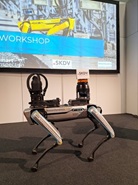
The SKDV maintains close partnerships – nationally with Swissmem, TKK and others, and internationally with the KVD in Germany and the KVA in Austria. What specific benefits does this network offer the service industry?
Our partnerships pursue a clear goal: Together with our partners, we promote needs-based training and professional development to provide our members with motivated specialists, both now and in the future, and to strengthen excellent service within the network. The term "service technician" is now an umbrella term encompassing a wide range of specializations, from white goods and heating and air conditioning to elevators and door and gate systems. We actively support this development. However, what concerns me is the issue of speed: The economy is developing rapidly, but curriculum development in Switzerland typically takes several years. We need greater agility in educational development so that training doesn't lag behind market demands. This is an issue that we are addressing intensively together with our partners.
Developing young talent is a constant issue across all industries. How can young people be inspired to pursue careers in technical customer service?
In close collaboration with our members and the educational institute Fachschule für Technischen Kundendienst (fstkd.ch), we have developed a continuing education course, "Service Technician with Association Diploma"—industry-independent, modular, and open to all specialist areas. While it's not currently possible to pursue initial vocational training as a "service technician" in Switzerland, one can develop their skills in the field instead of inevitably transitioning to an office job. In this context, we place a strong emphasis on soft skills: Service work always involves dealing with people—on-site at the customer's location when their equipment is down and they're frustrated. Clear communication, building trust, remaining calm under pressure, and strong organizational skills are essential. These are skills we need to cultivate. Furthermore, field service offers genuine appeal to young people: They work independently, solving different problems every day without a supervisor constantly breathing down their neck. This freedom is a real advantage, and we as an industry should communicate this more confidently.
From August 26th to 27th, 2026, the SKDV will once again be a partner association at "maintenance Schweiz" in Zurich. What can visitors expect from the SKDV, and why is the trip to Zurich worthwhile?
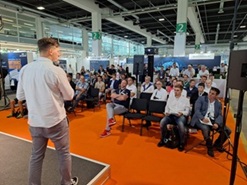
I don't want to give too much away just yet, but come and see us – it's worth it. Specifically, we'll be actively involved in shaping the "maintenance Talks" program – together with strong partners like the Zurich University of Applied Sciences (ZHAW) and other universities. Our motto: Shaping the service of tomorrow together: We bring cutting-edge academic knowledge directly to the trade fair stage, linked to concrete practical examples that demonstrate how theory really works in companies. From academia to real-world practice – that's our goal. And anyone who stops by the SKDV booth will meet service professionals who are passionately exchanging ideas. A good conversation – and perhaps a bite to eat – is usually where the best inspiration for everyday work arises.
What is your personal highlight when you think back on «maintenance Switzerland 2025»?
What always inspires me are the people. At "maintenance Switzerland," you don't meet laypeople, but true experts – maintenance professionals who come from the field and know what they're talking about. It's precisely this quality of exchange that makes this trade fair so special. At the last event, not a single minute went by without a fascinating conversation. For me, that's the heart of this event – and this exchange on equal footing, from professional to professional, is exactly what the SKDV strives to embody at its core every day.
Meet Thomas Seiler and the SKDV at Maintenance Switzerland from August 26–27, 2026, at Messe Zürich. Secure your free ticket today with invitation code 1410 on the website: www.maintenance-schweiz.ch
The interview with Thomas Seiler was conducted by Markus Frutig on behalf of Easyfairs Switzerland GmbH.